Office Clearance in Carshalton

Office clearance in Carshalton should be straightforward, careful and well planned, whether you are clearing a single floor, a suite of rooms or an entire workplace. We provide a practical clearance service focused on removing unwanted office contents and leaving the space ready for its next use. That can include desks, chairs, filing cabinets, shelving, reception furniture, meeting room items and general office clutter that has built up over time.
Our approach is built around sensible removal, clear sorting and a tidy finish. Useful items can be separated from general waste where appropriate, and we can work through mixed contents in a way that keeps the clearance organised. If your premises contain a combination of furniture, archive material and everyday equipment, we can help make the process easier to manage without turning it into an all-day disruption.
The best first step is to decide which areas need to be cleared and what must stay in place. A simple outline of the rooms, access points and main items usually makes the quotation process easier. If you are planning a move, refurbishment or lease handover, please ask for a quotation once you know the scope of work.
What we clear from offices
An office clearance often involves more than just moving a few chairs. Workplaces tend to collect different types of contents, and each one may need handling in a slightly different way. We can clear everyday office furniture, storage units, small fixtures, unsorted items from cupboards and rooms that have been used for general holding space. Where there are bulky items, we can remove them carefully so that corridors, lifts and shared access routes are treated with care.
We also clear contents that no longer support daily operations, such as redundant desks, damaged task chairs, broken pedestals, surplus tables and outdated meeting room furniture. If the clearance includes mixed office materials, we can separate the job into sensible sections so that items are removed in a structured order. Office clearance can therefore suit planned downsizing, relocation, end-of-lease work and general space recovery.
Furniture, storage and room contents
Office furniture is often the largest part of the job, but it is rarely the whole story. Cabinets, lockers, bookcases, drawers and shelving can take time to remove because they may be awkward to move when fully assembled. We handle these items with attention to the space around them, which helps when rooms are tight or access is limited. If the office contains a mixture of standalone items and fitted-looking storage, we can discuss what is movable and what should remain in place.
Clearance for different workplace situations
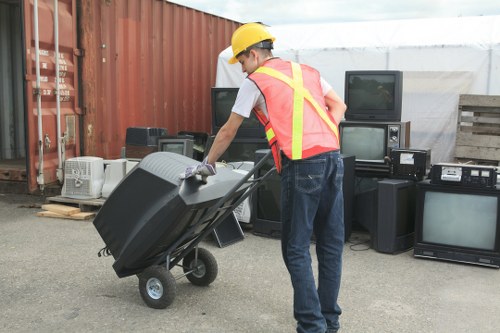
Different workplaces need different approaches. A small professional suite may need only a straightforward furniture clearance, while a larger office can involve several workstations, meeting areas and storage rooms. We can adapt the clearance to the type of premises and the way the space is being used. That means keeping the process practical, rather than forcing every job into the same pattern.
Some clients need support with a full room-by-room clearance; others only want selected items removed before handover or reconfiguration. Where appropriate, we can clear reception areas, back offices, archive spaces, breakout rooms and staff rooms as part of the wider job. For businesses comparing options and planning scope, our business waste removal page is a useful place to look at the wider service picture.
In many office settings, the key decision is whether the work needs to happen in stages or all at once. Staged clearances can be useful when areas must stay partially usable, while a single visit may suit an empty or nearly empty property. The right approach depends on the layout, the contents and the timing of your move or refurbishment.
How we handle office furniture and equipment
Office clearances normally include items that are large, awkward or simply no longer needed. We can remove tables, desks, chairs, cupboards, shelving units, pedestals and other workplace furniture. Where equipment is included, we can also clear printers, monitors, small IT-related items and mixed office contents, provided they are part of the agreed scope. The aim is to remove what needs to go without making unnecessary disturbance to what remains.
Careful handling matters because office spaces often contain items that are light enough to lift but difficult to manoeuvre through narrow doors or shared corridors. We work in a way that keeps the clearance orderly and makes the best use of the available access. If there are items that need to be dismantled before removal, that can be discussed at the quotation stage so the job is properly planned from the outset.
If you are comparing services, it may help to think about whether the job is mainly a furniture removal, a broader room clearance or a combined workplace clear-out. That distinction affects the time needed, the handling required and the way the contents are grouped. Keep the scope as clear as you can, and ask for a quotation when the list is ready.
Planning a smooth clearance

Good planning makes office clearance simpler for everyone involved. The most useful information usually includes the size of the area, the types of furniture present, whether there are stairs or lifts, and whether the work needs to be carried out before or after other contractors attend. That gives a clearer picture of how the clearance should be approached and helps avoid unnecessary delays on the day.
Photographs can also be helpful when a job involves a number of rooms or a mixed collection of items. A few clear images of the main areas, access points and bulky furniture allow the work to be understood more accurately before anything is booked in. If there are items that are staying, it is sensible to identify them in advance so they are not confused with those due to be removed. Pricing and quotes information may also assist when you are gathering the details for an enquiry.
Where office clearance needs to happen around business hours, access and timing should be considered early. Shared buildings may have loading arrangements, lift restrictions or specific rules about moving items through communal areas. A clear brief helps the work run more smoothly and reduces the chance of last-minute adjustments once the clearance is underway.
Office clearance for moves, refurbishments and end-of-lease work
Many office clearances are linked to a change in the way premises are being used. A move to smaller accommodation may create a surplus of desks and storage; a refurbishment may require the space to be emptied before trades can begin; and an end-of-lease handover may call for a thorough clear-out of furniture and general contents. We can support these situations by removing the agreed items in a controlled way.
That kind of work is often most effective when the contents are sorted into broad groups before removal. Items that need to stay, items to be relocated elsewhere and items for clearance should be kept separate where possible. It is also sensible to identify whether the space contains archive material, office furniture, loose equipment or mixed rubbish, because the mix of contents affects the way the clearance is organised. For related domestic-sized furniture work, our furniture clearance page shows another part of the service range.
Where the clearance is part of a wider transition, it can be useful to sequence the work around the point at which desks, storage and shared spaces are no longer required. That makes the process more efficient and reduces the chance of removing something that should have been retained or relocated first.
About Carshalton
Carshalton is a village-like district in the London Borough of Sutton, in south-west London, known for its mix of historic streets, open spaces and well-established residential areas. The centre of Carshalton is shaped by the River Wandle and its tributaries, with watercourses and ponds forming one of the most recognisable features of the local landscape. Grove Park, Carshalton Ponds and the nearby wooded and landscaped spaces create a setting that combines urban edges with a quieter, more traditional centre. The area has strong links to older settlement patterns, and its conservation areas help preserve a sense of scale that is different from denser parts of outer London.
Clearance options for larger and smaller offices

Office clearance is not only for large corporate premises. Small practices, shared workspaces, consulting rooms and compact studios can all benefit from the same careful approach when furniture or equipment no longer has a place in the room. A smaller clearance may involve only a handful of items, but those items can still be awkward if they are in a narrow corridor, upstairs room or shared building. The service is therefore best seen as a practical removal solution rather than a size-based category.
For larger workplaces, the main challenge is often volume and variety. Different rooms may contain different types of contents, and the clearance may need to happen in a planned sequence. In those cases, a room-by-room approach can keep the job organised. If you are deciding what to remove and what to keep, it may help to make a simple list. Useful categories include furniture, storage, equipment, loose items and anything awaiting separate handling.
- Desks, chairs and workstation furniture
- Cabinets, shelving and office storage
- Meeting room tables and reception items
- Mixed contents from cupboards, back rooms and unused spaces
- Redundant workplace items identified for removal
Managing mixed contents and workplace clutter
Office spaces often accumulate mixed contents rather than neat single-item loads. Boxes, paperwork, dated equipment and surplus furniture can end up in the same room, making the clearance more involved than it first appears. We can work through those contents in a practical order so the items agreed for removal are dealt with efficiently. Where there are separate categories of material, they can be grouped sensibly to avoid confusion during the job.
It is also worth considering any items that may need special attention because of their size, construction or location. A filing cabinet in a corner may be simple enough to move once emptied, while a tall storage unit may require more care in tight hallways or stairwells. Waste removal can be relevant where the clearance includes a broader mix of unwanted materials beyond standard office furniture.
If you are preparing a quotation request, keep the description factual and concise. The most useful points are usually what is being cleared, how much there is, where it is located and whether access involves stairs, lifts or limited parking. That gives a better basis for estimating the work than a vague description of the space alone.
Furniture disposal and recycling considerations

Some office items are best treated as simple furniture disposal, while others may be suitable for separate sorting depending on their condition and material. We can remove office furniture as part of the clearance and, where appropriate, separate items into different streams during the process. This is especially useful when the contents include a mix of reusable furniture, damaged items and general office waste. The job should always be handled in a way that matches the actual contents rather than forcing everything into one category.
For businesses that want to understand how different items are dealt with, our recycling and sustainability page gives an overview of the wider approach. Even so, the practical priority during a clearance is usually to make sure the agreed items are removed cleanly and efficiently. That can include furniture from offices, storage areas and meeting rooms, plus other contents that are no longer needed in the premises.
If the office clearance includes bulky furniture, it is helpful to confirm whether items will be lifted whole or whether any pieces need to be separated first. A little preparation at this stage can make the visit more efficient and can help avoid delays when the clearance begins. Send the details when you are ready, and we can take it from there.
Quotations for office clearance
Quotation requests are usually clearer when they focus on the actual work rather than general assumptions. The main factors are the amount of furniture or contents to be cleared, how accessible the rooms are, whether there are multiple floors or shared access points, and whether the job is a one-off clearance or part of a phased programme. If the premises include areas with different levels of access, it helps to mention that separately.
A useful quotation brief can be very simple. A short room list, a note of the main items and a few photographs are often enough to show what is involved. If the clearance is linked to another service, such as a wider property emptying or a related household job, those details can be added so the work is understood correctly. For broader property clear-outs, home clearance is another service area that may be relevant depending on the type of contents involved.
When you are ready to move forward, ask for a quotation that matches the rooms, contents and access conditions you actually have. That keeps the process straightforward and helps ensure the clearance is planned around the right scope from the start.
Related clearance work and practical next steps
Some office clearances overlap with other property clearance needs, especially when workplaces include garages, loft storage, archive rooms or areas used for overflow stock. In those situations, the same careful approach can be extended to the relevant space so the clearance remains coherent. The important point is to describe the location accurately, because a storage room, a loft area and an office floor each present different handling considerations.
Where a workplace contains furniture alongside general junk, it can be sensible to think of the task as a broader contents clearance rather than a simple furniture lift. That allows the job to be organised around the actual mix of items. If you are reviewing the options for a premises that includes larger shared spaces, flat clearance and garage clearance are examples of other service pages that may help you compare how different clearances are handled.
To finish well, make sure the items to be cleared are identified before the work begins and that access arrangements are understood. If you can provide that basic information, it becomes much easier to plan a tidy, efficient office clearance in Carshalton. Request a quotation today.